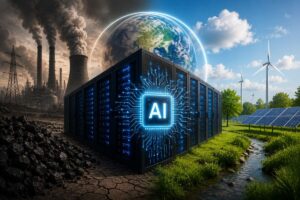

Here’s where it gets nuanced — and why supply chain and procurement leaders need to pay close attention.
Experts speaking at Procurement and Supply Chain LIVE made a compelling counter-argument: AI doesn’t necessarily consume more resources than manual processes would. It consumes them over a compressed timeframe, making the impact more visible and concentrated. The resources, they argue, would be used regardless.
Gartner predicts that by 2026, 50% of organisations will have adopted sustainability-enabled monitoring — so-called GreenOps — to manage energy consumption and carbon metrics across hybrid cloud. IDC forecasts that cloud adoption could prevent the emission of over 1 billion metric tons of CO₂ between 2021 and 2025.
PwC’s 2026 AI Business Predictions go further, suggesting AI’s overall effect on energy use and emissions could be neutral — if companies deploy it strategically. The Sustainable Procurement Pledge community increasingly frames this as a “both/and” challenge: AI as both the problem and the most powerful tool we have to address it.
“In the long run, I believe there are definitely ways that we will move AI to being compatible with our lives and our planet.”
— DR ALYSON FREEMAN, DIRECTOR OF DATA CENTRE SUSTAINABILITY, DELL TECHNOLOGIES